
Our guide for Jebel Shams, Oman’s “Mountain of the Sun”
Hiking the second tallest mountain in Arabia wasn’t on my list when I moved to Oman, a country in the southeast Arabia peninsula, last Fall to study Arabic. There were a few canyon (“Wadi”) hikes I was looking at tackling over a weekend, but tackling what I had heard was the technical equivalent of hiking a 14er in the Colorado Rockies? Not a chance.
Cue waking up at 4am to begin the 2-hour drive up the Jebel Akhdar, or green mountains, along guardrail-less dirt roads with perilous hundred-meter drops into the canyons below, to begin what would be 10 hours of hiking to around 10,000 feet of elevation. I couldn’t recommend the hike more.
You can hear more about the hike on our latest podcast, here:
Podcast Episode: Hiking Jebel Shams, Oman’s Mountain of the Sun
Why Oman?
But first off: why Oman? Why travel to the edge of the Arabian peninsula, to a country many people haven’t heard of?
I already had an introduction to this country: for the past year, I’ve been studying Arabic in the evenings at the Omani Cultural Center in Oman, which part of the embassy's “soft power” offers free Arabic classes in the DC area. I’ll admit I was influenced: meeting Omanis, and seeing the incredibly beautiful photos and videos of their country not-so-subtly pushed by the cultural center, made me curious. Being between jobs, I had the rare opportunity to spend four months studying in a tiny town called Nizwa, around an hour and a half drive from the country’s capital (and only city), Muscat.
And Oman is beautiful. I’ve traveled to the Middle East before – spending significant time in Jordan, Morocco, and Turkey – but Oman is something else. Though most of the country is desert, the vast majority of the population lives along the edges of the Hajar Mountains, which run up and down the coast. Here you’ll find small, ancient towns like Sur, Nizwa, Bahla, Al Hamra and Misfah al Abriyyin, which are slowly drawing in more tourists to do things like snorkeling in the Dimaniyat Islands or ride dune buggies in the Sharqiyya Sands.
Add to all of this Oman’s well-earned reputation for safety and the famous hospitality and genuine kindness of the Omani people, and you have a truly special country.
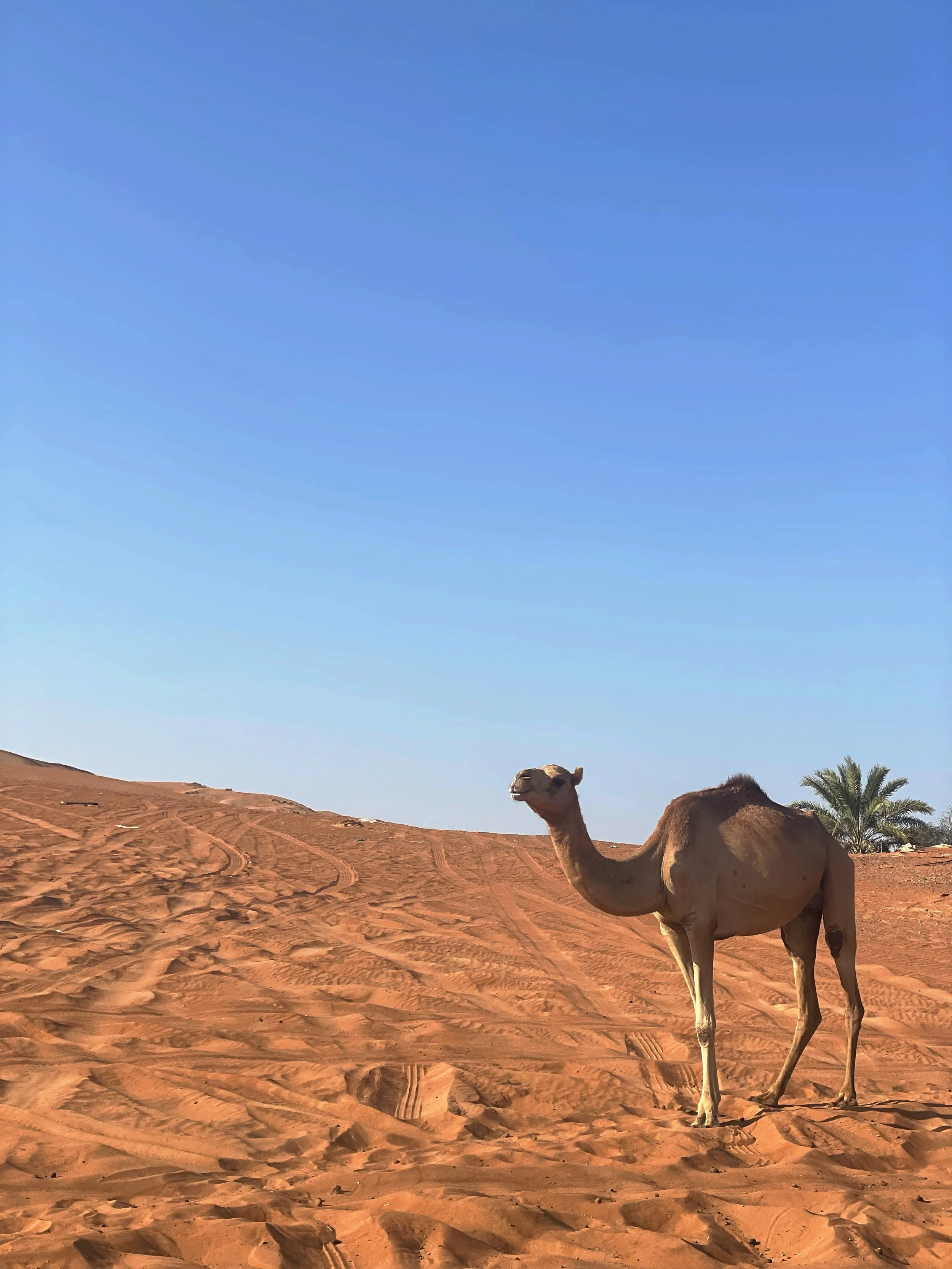
Camels in Shariqqa, Oman
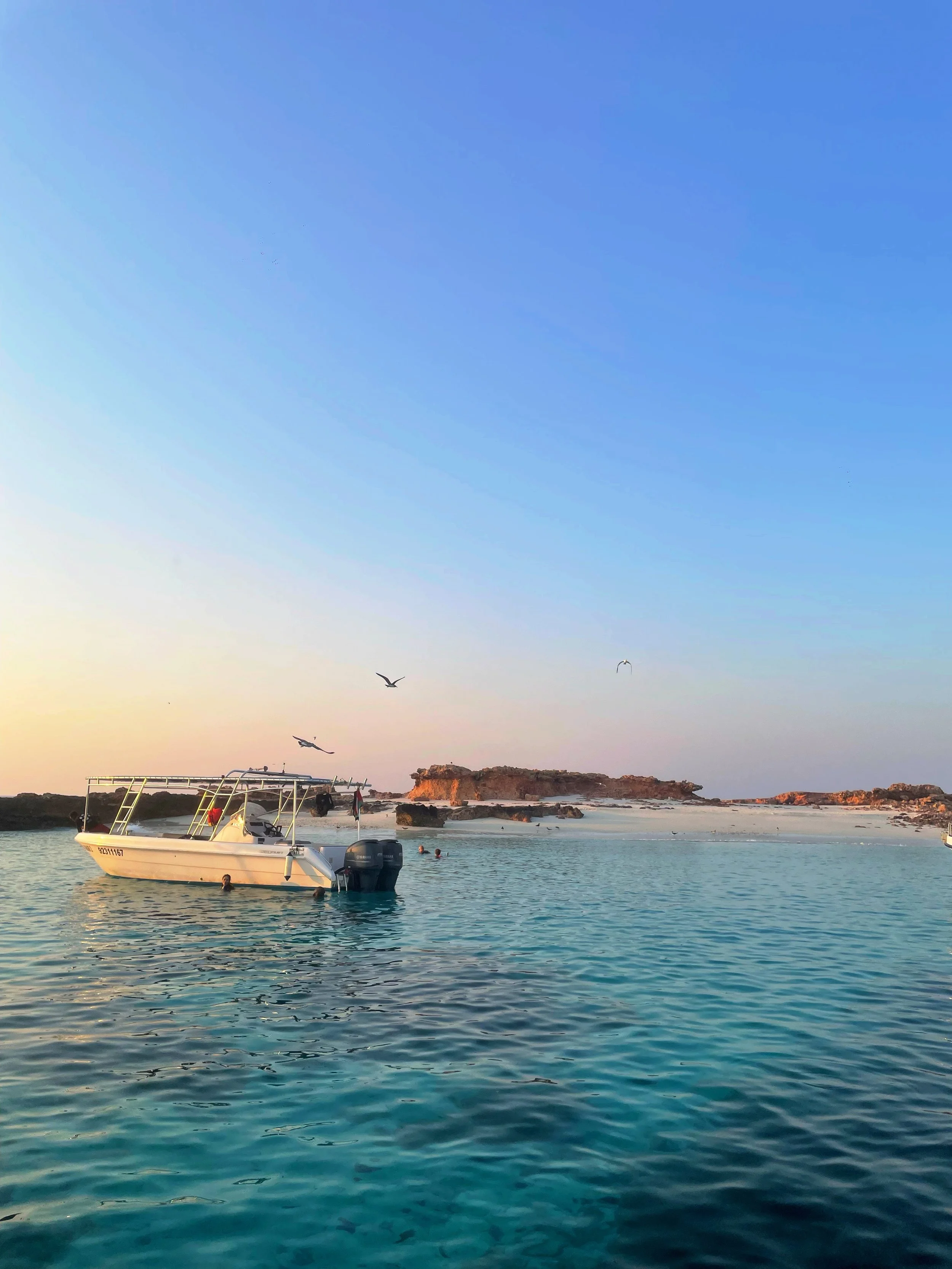
Diyamiaat Islands, Oman
Prepping for Jebel Shams
Jebel Shams is so named for being the first place in Oman that receives the sun’s light, hence the “mountain of the sun.” It lies in the Jebel Akhdar, or green mountain range, which has historically been home to bedouins – a nomadic Arab people native to the Arabian peninsula, but now found all across the Middle East, who traditionally relied on herding goats, camels, sheep and cattle. Many bedouin families still call these mountains home today, though most have left behind the traditional nomadic lifestyle.
Only in the last few years has the Omani government begun building official hiking trails up Jebel Shams. There are two: the first being W6 trail, a smaller 8-mile trail known as the “balcony walk” that follows the rim of Jebel Shams’ famous canyon, Al Nakhur. But if you want to hike to the top of Jebel Shams, there’s an alternate, 14-15 mile trail you can take: the W4.
Hiking the mountain means starting early. We started from Nizwa, around a two hour drive from the base of Jebel Shams, and hit the road around 5:30 A.M., to begin our hike at around 7:30 or 8 in the morning. Starting from Muscat, itself an hour and a half away from Nizwa, means hitting the road at 4 A.M. to get to the trail on time. Plan accordingly: in our experience, it took us a good 10 hours to hike round-trip, and even then we found ourselves losing daylight the last hour or so of our hike.
There are a few alternates here, if you’re coming from Muscat. The first is to spend the evening before in Nizwa, which is a beautiful little castle town with plenty of hotels and small bed and breakfasts and a well-preserved old town. Having spent four years living in this town myself, I highly recommend spending at least an evening here.
Alternatively, atop Jebel Shams are several places to stay overnight, ranging from “glamping” tents to Air BnB houses to, increasingly, hotels. We took the cheap option and spent around 100 U.S. for a night after our hike in an Air BnB in a small village atop Jebel Shams – spartan, but clean.
Know that you need a four wheel drive car to reach Jebel Shams. Even if you think you can tackle the roads in a typical rental, there is a checkpoint at the base of the mountain, and the Omani military will turn you around if you don’t have one. It’s around US$100/day (30 Omani rial) in our experience for a good four wheel drive.
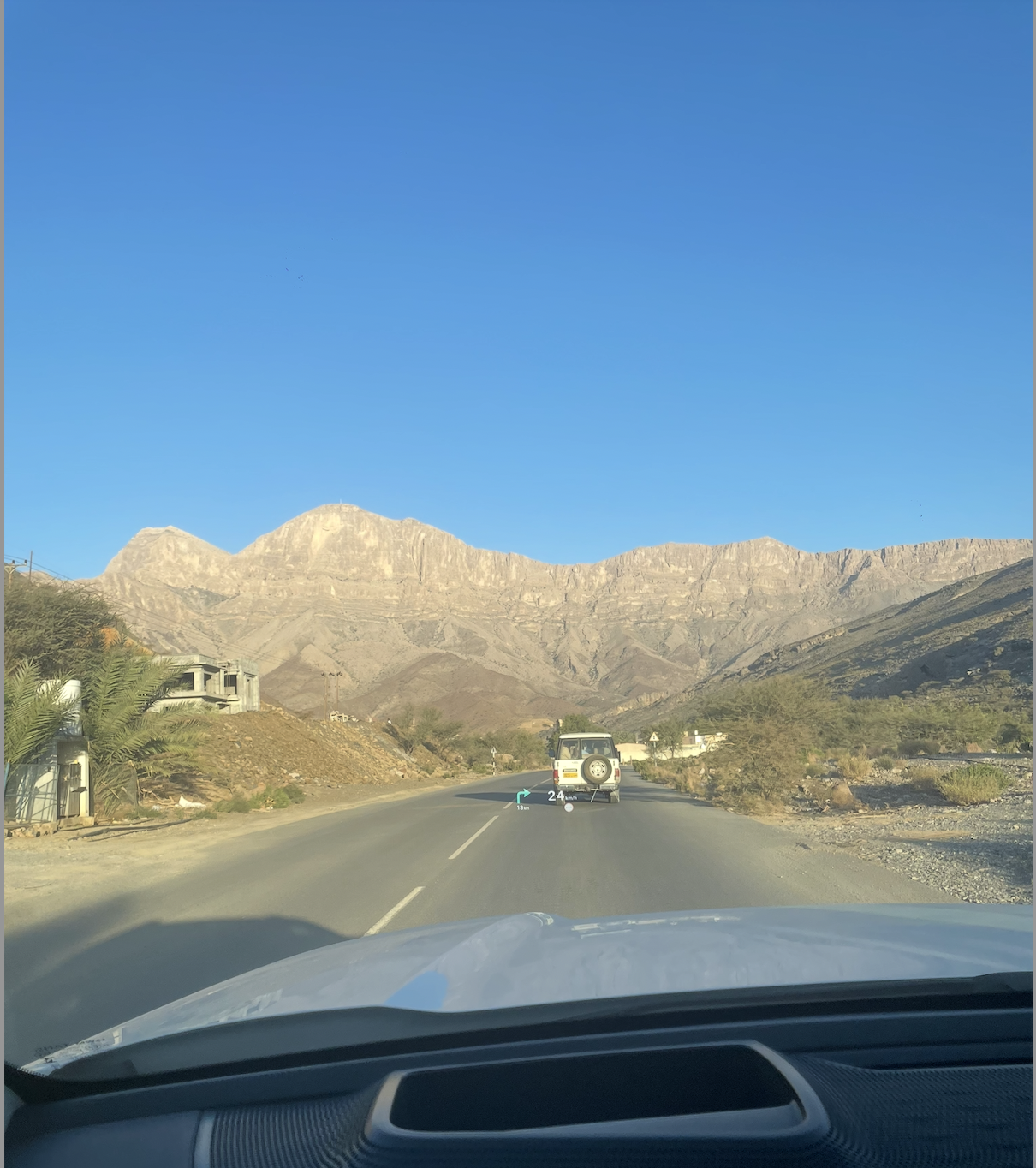
On the way to Jebel Shams
Regardless, there are no shops atop Jebel Shams. If you’re not staying at a location that you know provides food and water, make sure to swing by a store in the nearest town, Al Hamra, on your way over. My recommendation is four liters minimum per person for the hike (perhaps more for the summer), and plenty of snacks and sandwiches. [As a sidenote, on your way back the next morning, swing by Reem al-Yemen on Al Hamra’s main strip for breakfast. It’s one of my favorite restaurants - and cheap!)
Finally, we hiked in November, and it got pretty cold at the top of the mountain. Bring layers, including gloves and a hat. Importantly, bring a headlamp! Night comes quickly, and you don’t want to be stumbling along the edge of a canyon in the dark unawares.
The Hike
I’ll let you experience the hike for yourself, but it is demanding. It took us around six hours to reach the first peak of the mountain, going at around one mile/hour. The return wasn’t much faster, taking us at least another four hours.
There are in fact two peaks on Jebel Shams, though the first is technically inaccessible: the Omani military has placed a small military base at the top of the mountain, which we heard was a radar station to watch over the Persian Gulf. The trail brings you just beneath this peak, however, which has an incredible view over the Jebel Akdar range.
Most of the hikers we met turned around here. If you want to say you fully climbed Jebel Shams, however, there is a secondary, slightly smaller peak another hour and a half further. Watch your time, though: getting to the second peak adds another three hours minimum to your hike, and the temperature drops pretty significantly come sunset.
Otherwise, the main draw of the hike is the Al Nakhur canyon. Especially come sunset, the canyon really shines in various colors and shadows of orange, purple and gold. It’s quite a site.
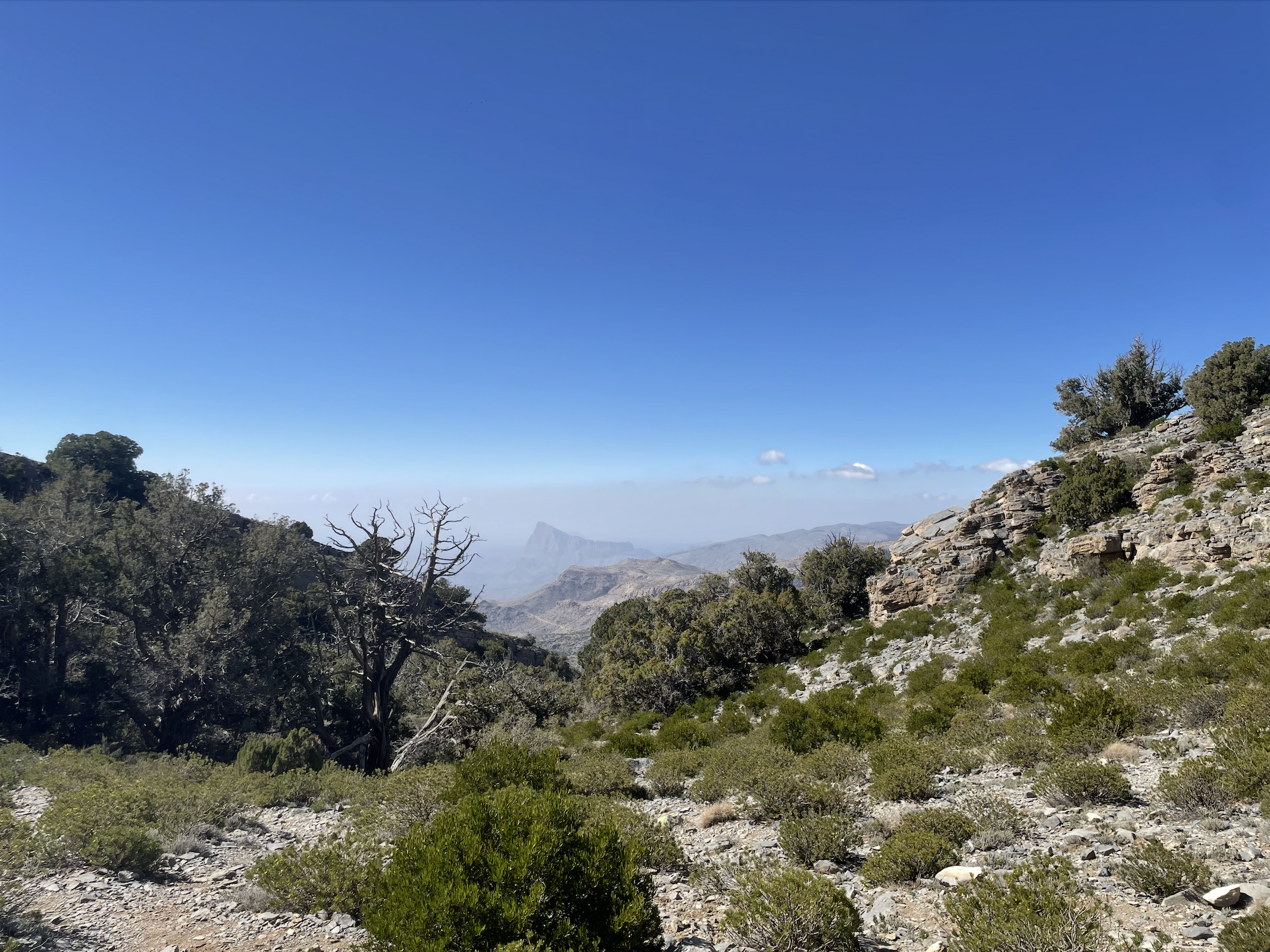
Hiking up Jebel Shams
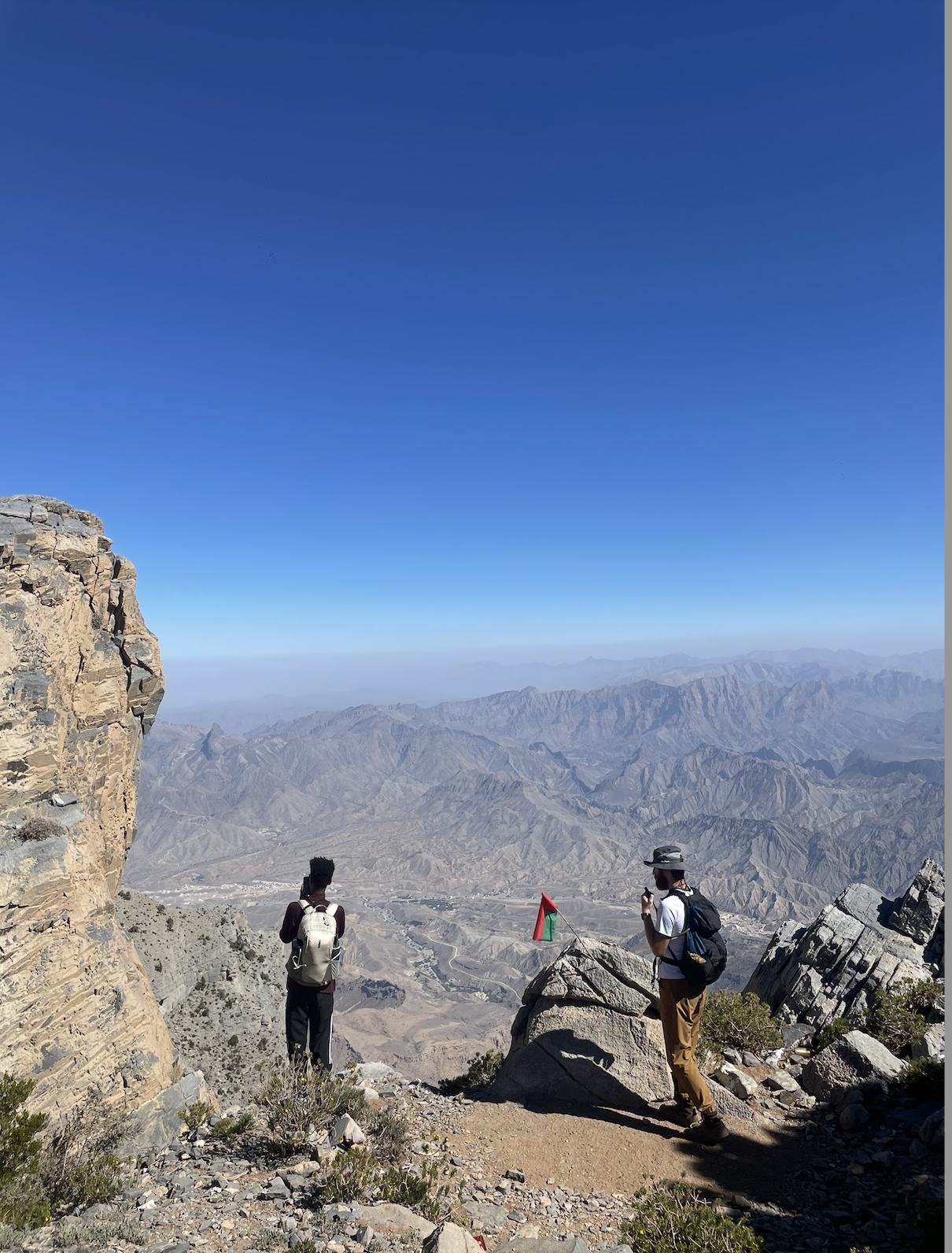
The view from just below Jebel Shams’ North Peak
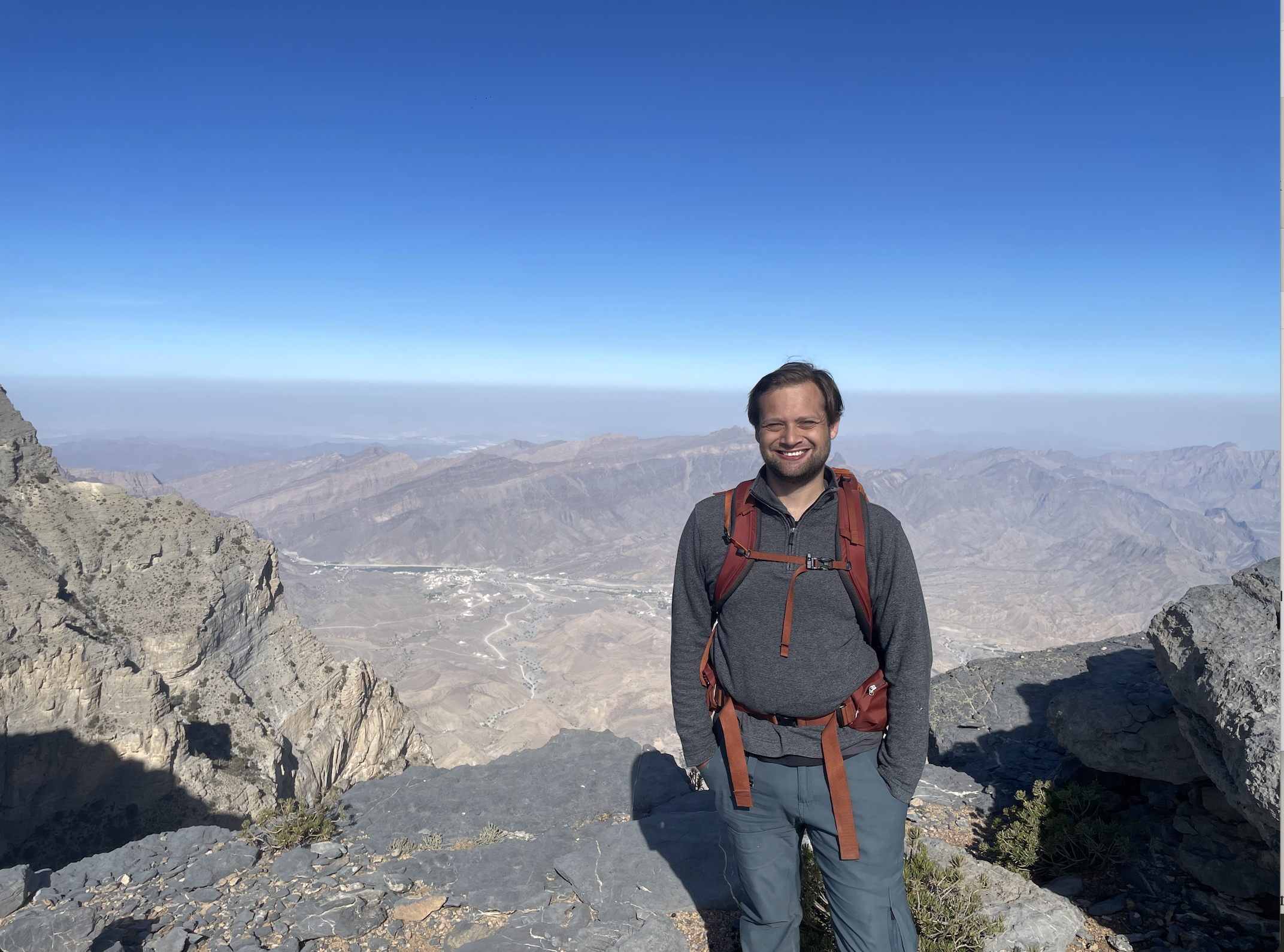
Mandatory “top of the trail” photo
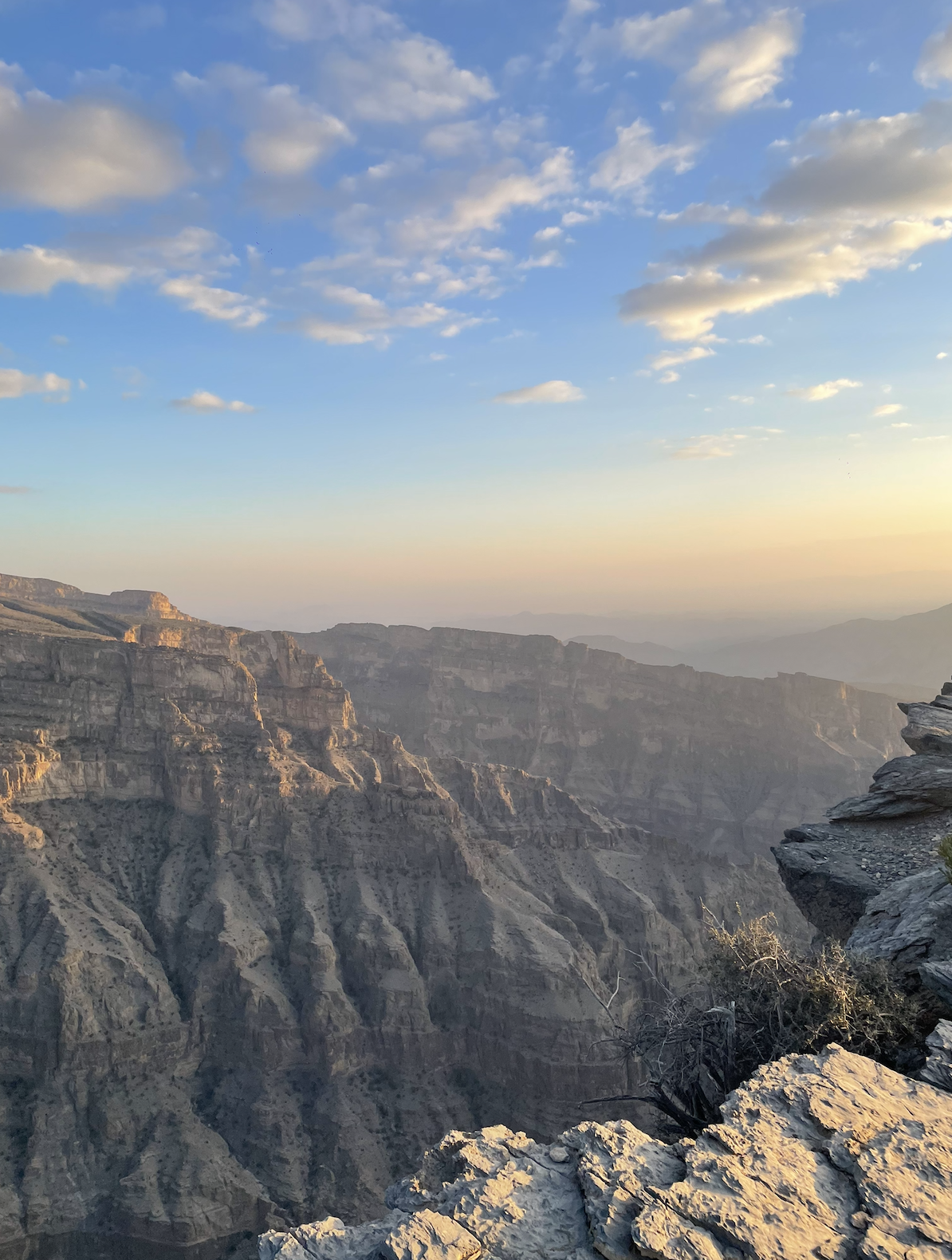
Al Nakhur canyon at sunset
Before you go
Want to hike Jebel Shams? Here’s your checklist:
Rent a 4x4/four wheel drive car. Approx 30 rial/day (US$100). You can safely rely on Google Maps for accurate directions to the trailhead (In my experience, Apple Maps does not work in Oman).
Pack additional layers, gloves, and a hat. Know that temperature drops significantly at night.
Pack a headlamp. Don’t get left outside in the dark without one.
Pack at least four liters/water per person, a sandwich lunch, and snacks. All of this can be purchased in the nearby town of Nizwa (Lulu Hypermarket is a standard Western-style supermarket) or Al Hamra.
Rent a place to sleep, either the night before or after your hike. Check out Air BnB or Booking.com for options. If looking to stay in a town rather than atop the mountain, consider the old town in Nizwa, around 1.5 hrs away.
Get on the road early. From Nizwa, plan to leave around 5 or 5:30 A.M. From Muscat, around 4 A.M.
Give yourself at least 10 hours to complete the trail, 12 if you’re hiking to the secondary peak. If you’re hiking the smaller W6, around 5-6 hours is likely enough.
There is no service atop the mountain, so make sure you have someone who knows where you are in case of an emergency. We found many hikers along the trail, but it’s best to be safe.
Enjoy one of the most beautiful hikes in all of the Middle East!
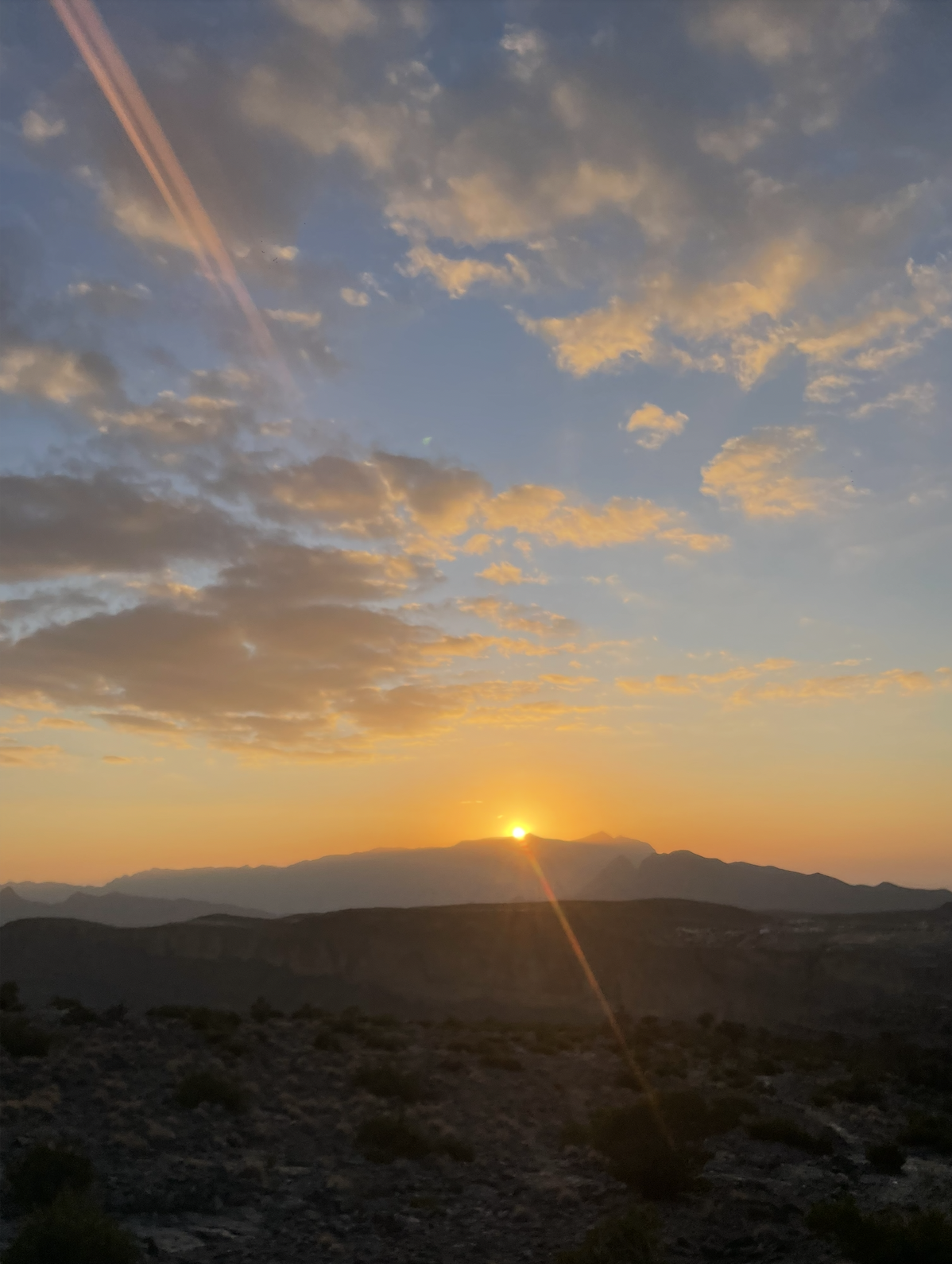
Sunset over the Jebel Akhdar range
